Areas
Four cities. They are not interchangeable.
Netanya, Ra'anana, Herzliya and Caesarea are within half an hour of each other. Choosing between them is a decision about how you intend to live, not about which beach photographs better.
Under each city are the same four notes, because they are the four questions every one of my buyers ends up asking: how far the synagogue really is, what happens to a child who arrives with no Hebrew, whether an ordinary day works without a car, and where the water is. Where a city is weak on one of them, it says so here. That is more useful to you than a page on which everywhere is excellent.
Netanya
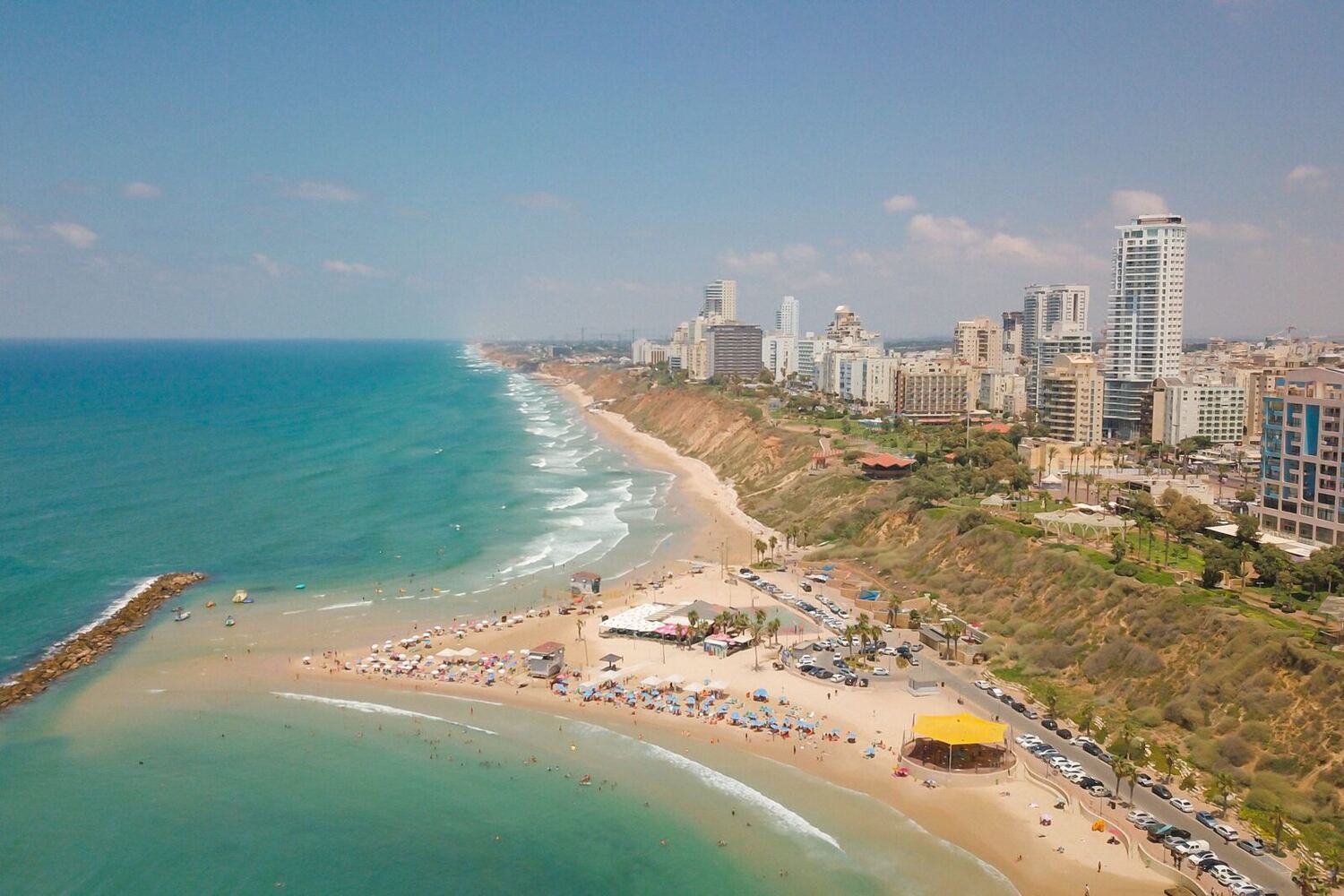
On the cliff, about thirty kilometres north of Tel Aviv.
If this coast has a French-speaking capital, it is Netanya. The community here is old enough to have built its own infrastructure — shops, bakeries, congregations, doctors and lawyers who work in French — which is why French families keep arriving rather than the reverse. Arriving into an existing community is a different experience from arriving into a good address.
The city runs along the top of a cliff, with the beaches below it and paths and lifts down. The centre, around Independence Square, is dense, walkable and unglamorous in a way many buyers end up preferring. South of it, Ir Yamim and Poleg are newer, quieter and built for the view.
- Synagogues
- Many, and varied enough that nusach is a real choice rather than a compromise, French rite included. In the centre and the older neighbourhoods most residential streets are a short walk from one. In the newer southern quarters the walk is longer — time it yourself before you commit to a street.
- Schools
- The absorption infrastructure here is genuine rather than aspirational, and French is the language it grew around. Ask about the stream and about the year of entry: a child arriving at eight and a child arriving at fourteen are facing different problems, and the school's answer should be different too.
- Daily life
- Works without a car in the centre. Market, clinics, pharmacies, banks and the buses are inside the same few streets, and the train to Tel Aviv runs from the eastern side of the city.
- The sea
- Directly below, along the whole length of the city. The cliff is the thing to understand before you read a listing: an apartment can be two hundred metres from the water and still be a ten-minute walk from the sand.
Ra'anana
Six kilometres inland. Not a seafront town, and this page will not pretend otherwise.
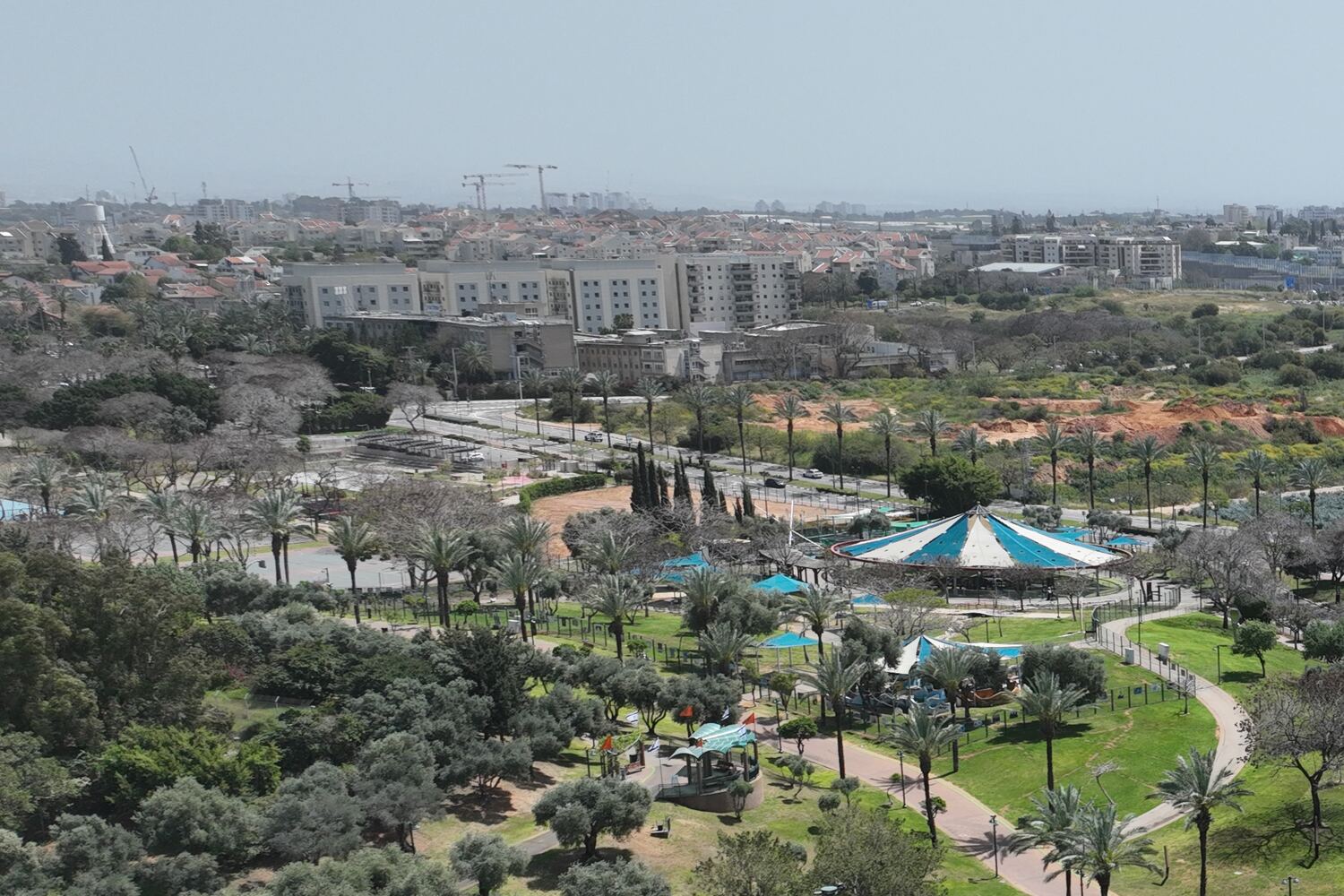
Ra'anana is where a large share of Anglophone and Francophone olim actually settle, and it is chosen for reasons that have nothing to do with a view. It is low-rise and green, built around a single commercial spine — Ahuza — that runs the length of the town, with quiet residential streets behind it and a large park.
The English-speaking community here is big enough that a family can land and be functional within a week: someone has already found the paediatrician, the electrician and the ulpan, and will tell you. That is worth more in the first year than most things a listing mentions.
It is the inland anchor of the same corridor — fifteen minutes by car from the beaches at Herzliya and Netanya, and inside the same working radius as both.
- Synagogues
- Dense, and spread across the town rather than concentrated in one quarter, so a walking-distance address is a question of choosing the street rather than the neighbourhood. Nusach varies considerably between them; ask before you fall in love with a house.
- Schools
- The strongest single reason families choose Ra'anana. Absorption of English-speaking children is long enough established here that the schools know what to do rather than improvising it, and the parent networks around them are unusually organised.
- Daily life
- The most genuinely walkable of the four. Ahuza carries the pharmacies, banks, cafés and the market; almost nothing about an ordinary day requires driving.
- The sea
- Not here. Fifteen to twenty minutes by car to Herzliya or Netanya. If waking up to the water is the point of the purchase, Ra'anana is the wrong city, and I will say so in the first conversation rather than the fourth.
Herzliya
On the coast, about fifteen kilometres north of Tel Aviv — and effectively two towns.
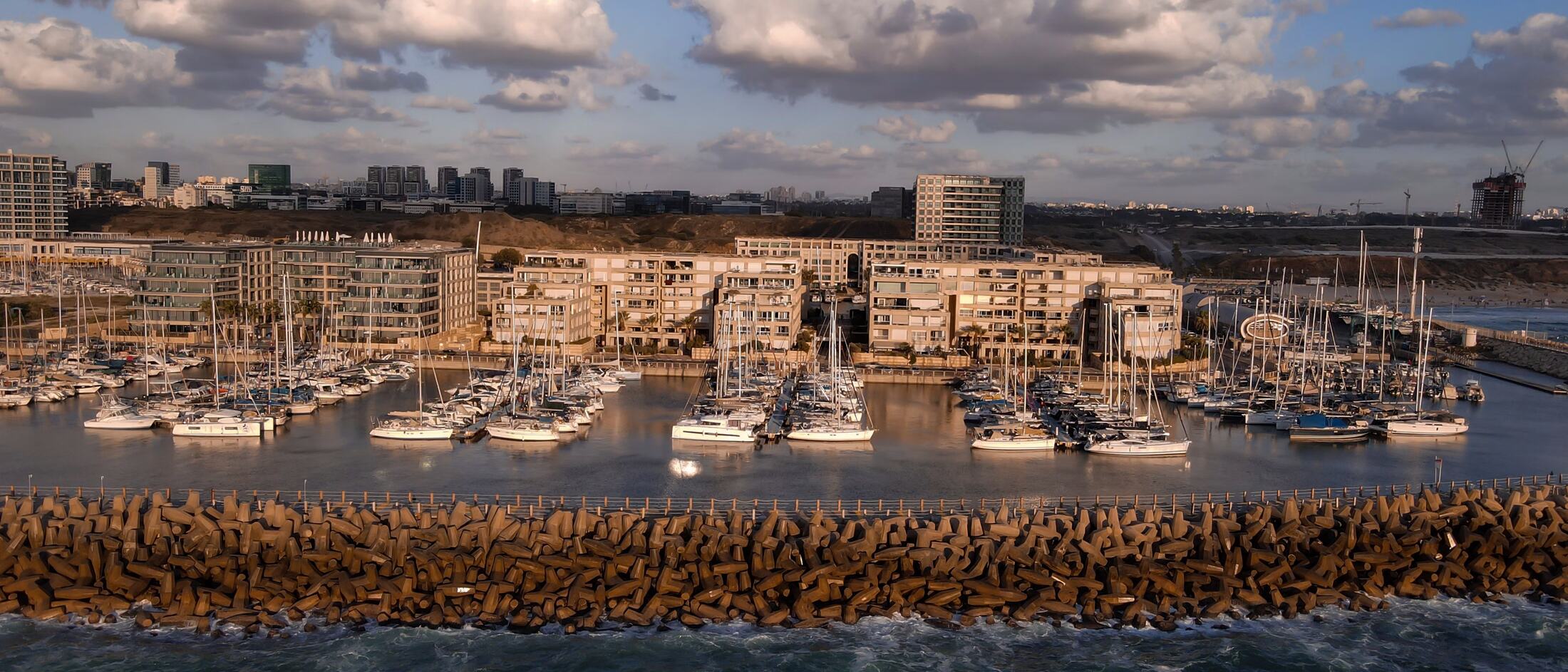
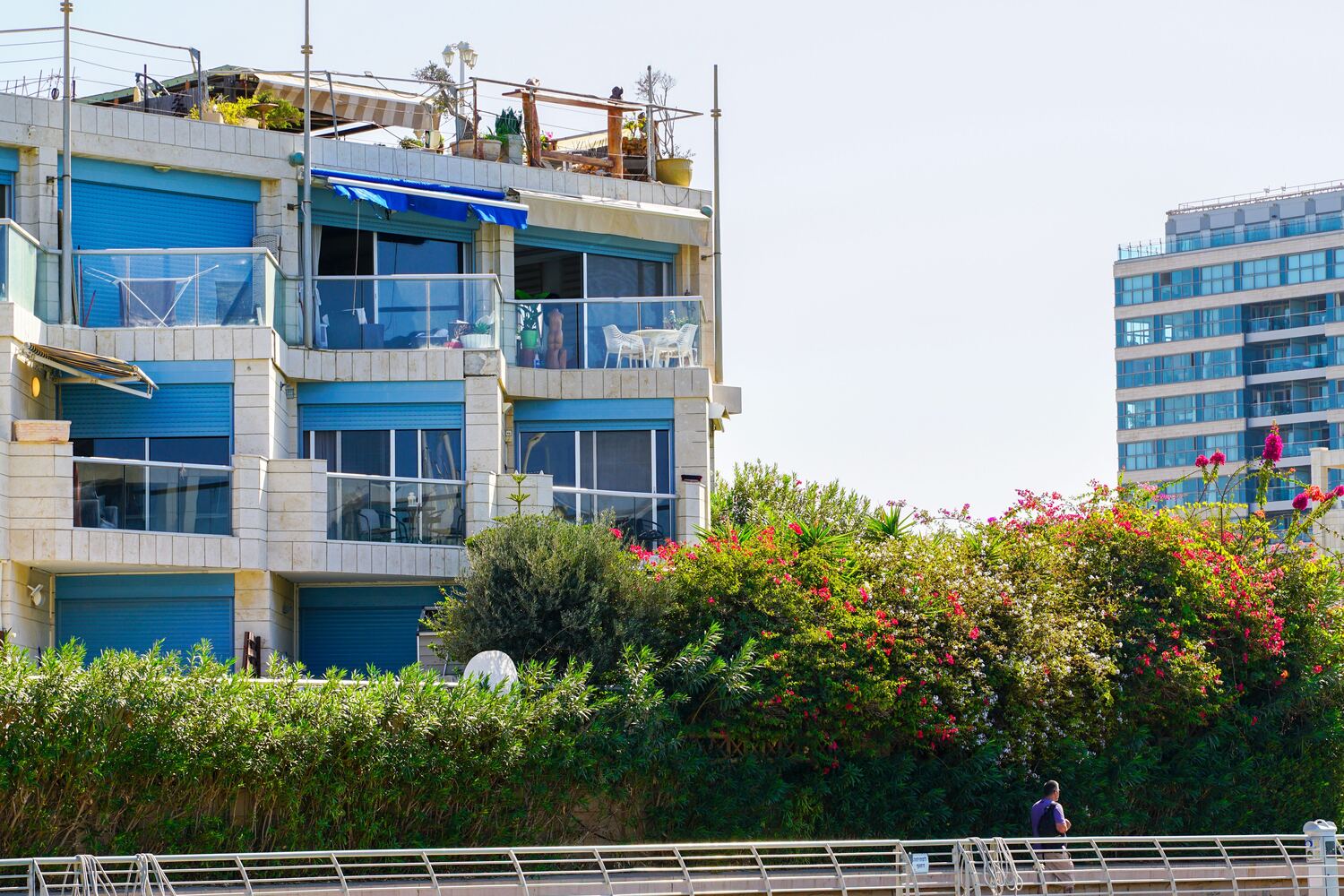
Herzliya Pituach, west of the highway, is the expensive one: large plots, private houses, the marina, embassies and ambassadors' residences, and a permanently international population. Herzliya proper, east of it, is an ordinary and pleasant Israeli city where the same money buys considerably more of everything except sea.
Proximity is the practical argument for both — Tel Aviv and the technology corridor are close enough that one member of a couple can work there without the household living there.
- Synagogues
- This is where Pituach has to be said plainly: the plots are large, the streets are long, and congregations sit further apart than in a dense neighbourhood. If a walk to shul on Shabbat is a condition, it narrows Pituach to particular streets — a filter to apply before viewing, not after. East Herzliya has both the density and the choice.
- Schools
- International and bilingual schooling is realistic here in a way it is not everywhere on this list, which is part of why the diplomatic and expatriate population stays rather than passes through.
- Daily life
- In east Herzliya, on foot, easily. In Pituach, largely not: it is built for cars, and the marina and the Arena centre are where the errands are.
- The sea
- Acadia, Zevulun and Hasharon, plus the marina — and in parts of Pituach a genuinely short walk to the water, which is precisely what the premium is being charged for.
Caesarea
On the coast, roughly halfway to Haifa, and unlike anywhere else on this list.
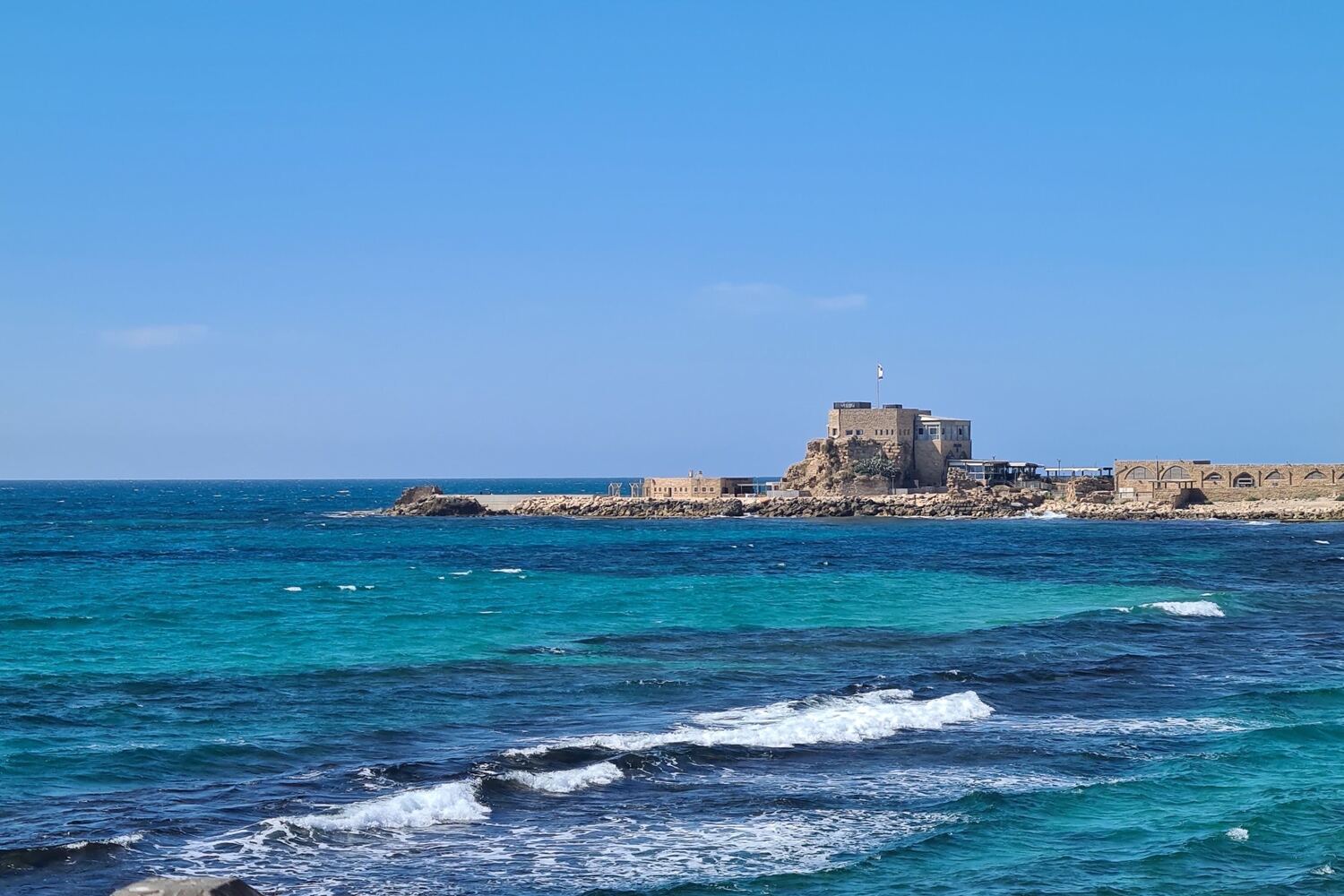
Caesarea is a planned, low-density residential town developed and administered by the Caesarea Development Corporation, laid out in numbered clusters of villas rather than streets of apartment buildings. There is a golf course, a Roman harbour and national park at one end and the aqueduct beach at the other, and almost no apartment stock: what people buy here is a house with land.
It is quiet in a way that buyers either want very badly or find unbearable within a year, and it is worth being honest with yourself about which you are before you look at a single house.
- Synagogues
- Present, and serving a community that largely drives to it. Caesarea's geometry does not produce short walks. If walking distance is a condition of your purchase, this is the hardest of the four to satisfy and usually the wrong choice — I would rather say that here than after two viewings.
- Schools
- Children generally travel out, to Or Akiva, Hadera or Pardes Hanna, or to private and international schooling further afield. Plan the daily journey before you plan the house; it is the thing families here mention first.
- Daily life
- Not without a car, and I will not soften that. The commercial centre is small and everything else is a drive.
- The sea
- Beaches at the aqueduct and beside the harbour, and a whole town oriented towards the water without being built on top of it. For some buyers that distance is the appeal, not the compromise.
None of this replaces standing in the street at eight in the morning.
It is meant to get you to the right street. Tell me who is coming and what has to be within walking distance, and I will tell you which of these four cities we should be looking in — including when the answer is none of them yet.
Next step
Tell me what you are looking for.
A first conversation costs nothing and commits you to nothing. Twenty minutes is usually enough for both of us to know whether I am the right person for your purchase.
English · French · Portuguese · Hebrew